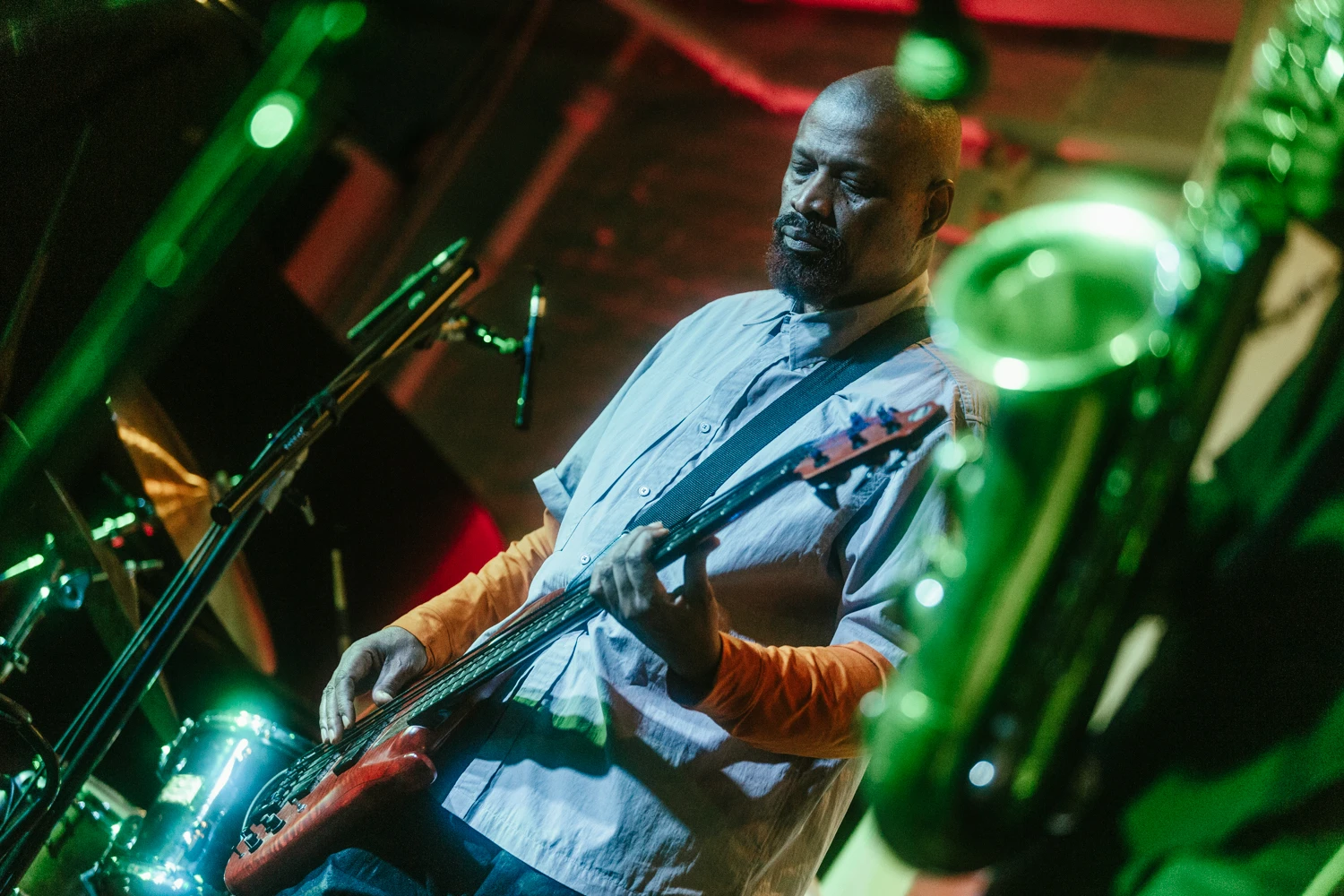
The first event in bassist, composer and writer Melvin Gibbs’ multi-part residency with FourOneOne, Geechee Reclamation uses music and dance to affirm the Gullah-Geechee people’s indelible contribution to American culture and music, which goes way beyond a “folkloric footnote.” Using electronics, archival recordings and an exceptional group of performers—dancer/choreographer Leslie Parker, multi-instrumentalist Ben LaMar Gay along with keyboardist Paul Wilson Bae, drummer Warren “Trae” Crudup III, and Gibbs on electric bass and electronics—Geechee Reclamation brings together the often overlooked origins of George Gershwin’s famous “folk opera” with Gibbs’ own family history.
This project is a musical homage to Melvin’s Gullah-Geechee ancestors, harking back to his compositions “Wadmalaw Island,” written for the Power Tools album Strange Meeting, and “Farther Unknown,” written for the band Harriet Tubman’s The Terror End Of Beauty. It also echoes the creative road Gibbs paved on his Amasia: Anamibia Sessions 2 album, of which he wrote: “The work bridges the gap between alive and unalive in a Voodoo/Hoodoo kind of way that you could look at as recentering the ancestral Afrocentric view of transhumanism in this moment.”
The performance explores concepts that Gibbs examines in “Stono’s Children,” the fifth chapter of his new book, How Black Music Took Over the World, a hybrid of musicology, history, and memoir that traces how African-originated cultural structures guided the creation of Black music and much of modern music itself.
In 1934, Gershwin traveled to Charleston, South Carolina to hear the music that would become the foundation of his classic American opera Porgy and Bess. He spent the summer on James Island, where he learned about the Gullah-Geechee people and their music. The Gullah-Geechee are descendants of African slaves who managed to retain many significant African cultural traditions, languages, and spiritual practices, due to their relative isolation on coastal plantations and sea islands of the southeastern United States.
During his trip, Gershwin traveled to South Carolina’s Wadmalaw Island to witness Plantation Echoes, a stage rendition of the music and dance of the island. The performance covered a time span stretching from the then-present back to antebellum days. The cast, made up of islanders, including venerable residents who, like cast leader Mister Cesar Roper, had formerly been enslaved, presented a performance especially for Gershwin. Finishing the research for How Black Music Took Over The World, Gibbs discovered that his great-grandfather, Solomon Gibbs, was one of the performers. The book is dedicated to his memory.
Learn more at www.fouroneoneprojects.org