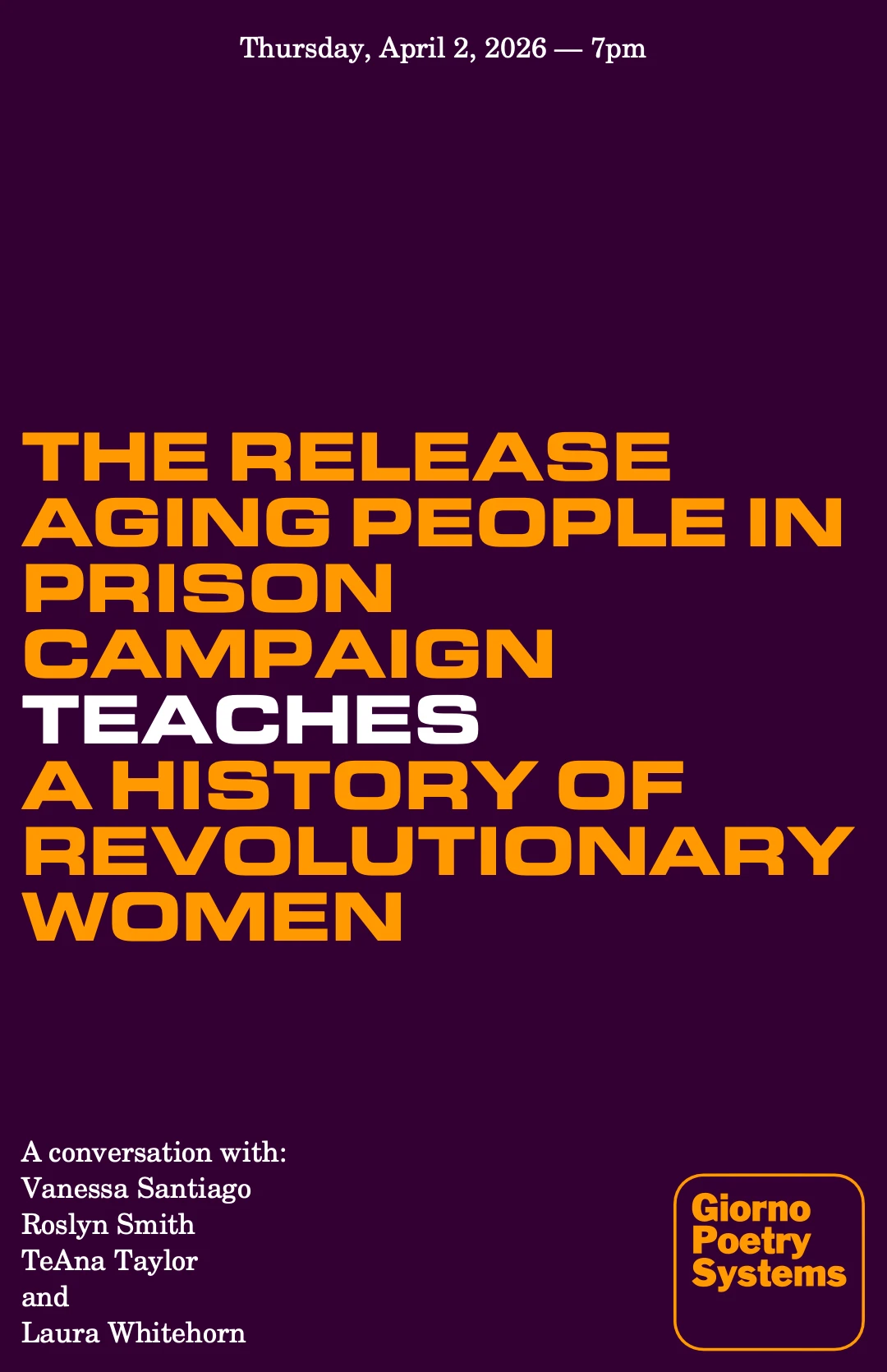
The Release Aging People in Prison (RAPP) Campaign teaches a history of revolutionary women
New York State currently holds over 31,000 people behind bars, the large majority of whom are Black and Latinx. One in four of these New Yorkers is currently serving a life sentence, over 1,000 of them without the possibility of parole. Close to 4,000 New Yorkers have already served over 20 years. While nearly 8,000 New Yorkers are serving parole-eligible sentences, an understaffed and racist parole board denies release to the majority of eligible people who appear before them, lengthening sentences and compounding the effects of long-term incarceration. Over the last twenty years, the number of elders behind bars has doubled.
The Release Aging People in Prison (RAPP) Campaign is a grassroots advocacy network created and led by formerly incarcerated people that advocates on behalf of incarcerated elders. Guided by the belief that no one—regardless of the harm they may have caused—should die in prison, RAPP advocates for an end to a punitive system that locks whole communities of Black and brown people in cages, fighting instead for an expansion of parole, compassionate release, clemency and an end to life imprisonment.
In the last four weeks alone, there have been three deaths in Bedford Hills women’s prison, two by suicide. In this roundtable conversation, RAPP’s Vanessa Santiago, Roslyn Smith, TeAna Taylor, and Laura Whitehorn contextualize how we got to this moment with a discussion on the history of vagrancy laws and the criminalization of black women’s bodies, connecting the vagrancy arrest of Esther Brown in 1917 to legacies of pushback, including women’s bail funds, prison uprisings, and the creation of solidarity networks.